- Use the official tournament schedule and ticket listings.
- Choose seats and an arrival time that suit your group.
- Understand ring rituals and what to expect at a stable.
A sumo bout can be over in seconds. The pause before it, the wrestlers returning to their corners and the crowd watching for the first move are part of the experience. For a first family visit, start with the tournament calendar and the amount of time your group will enjoy in the arena. A morning practice or a short museum visit works well on a trip with different dates.
Check which cities host Grand Sumo
The Japan Sumo Association stages six Grand Sumo tournaments, known as honbasho, each year. Tokyo's Ryogoku Kokugikan hosts the January, May and September tournaments. Osaka hosts in March, Nagoya in July and Fukuoka in November. A tournament lasts 15 days. Check your travel year and actual dates before planning a stay around one. The association lists the venue, opening and closing days, and the date advance tickets go on sale. Japan Sumo Association tournament calendar
If your city dates overlap a tournament, pick two possible days before tickets go on sale. Leave enough time for lunch, the journey to the venue and ticket collection if required. Buy through an authorized seller linked by the association and check how you will receive or collect the tickets. For a trip built around sumo, compare when to visit Japan with the tournament window before committing to a city sequence. Official ticket buying guide
Choose seats and a time to arrive with children
Chair seats often suit families with small children and people who prefer back support. Look at how many steps there are from the concourse and whether an aisle seat is available. Box seats put your group together on floor cushions. Check how many people your box holds and think about whether everyone can sit on the floor comfortably. At Ryogoku, give the closest ringside seats a pass if anyone would be worried by a wrestler tumbling beyond the edge of the ring. Japan National Tourism Organization's Tokyo sumo guide
Lower-ranked wrestlers compete earlier and the top division takes the ring later in the day. With young children, choose one part of the program around a meal or nap. An older child who wants to see the top-ranked wrestlers can check when the top division is due to enter and arrive with time to find your seats. With a child who likes quieter outings, try earlier bouts and leave when everyone has seen enough. On the day, check the published program for timing. Japan Sumo Association's introduction to the sport
Before paying, confirm which children need tickets or their own seats, how to reach accessible seats, where a stroller can be left and whether your ticket allows re-entry. The venue or ticket seller is the right place to check these details. Plan restroom stops between bouts, keep the aisle clear and check the venue's rules before bringing food or a camera. Choose a meeting point outside the seating area if your group wants to leave at different times.
Follow a bout without knowing the rankings
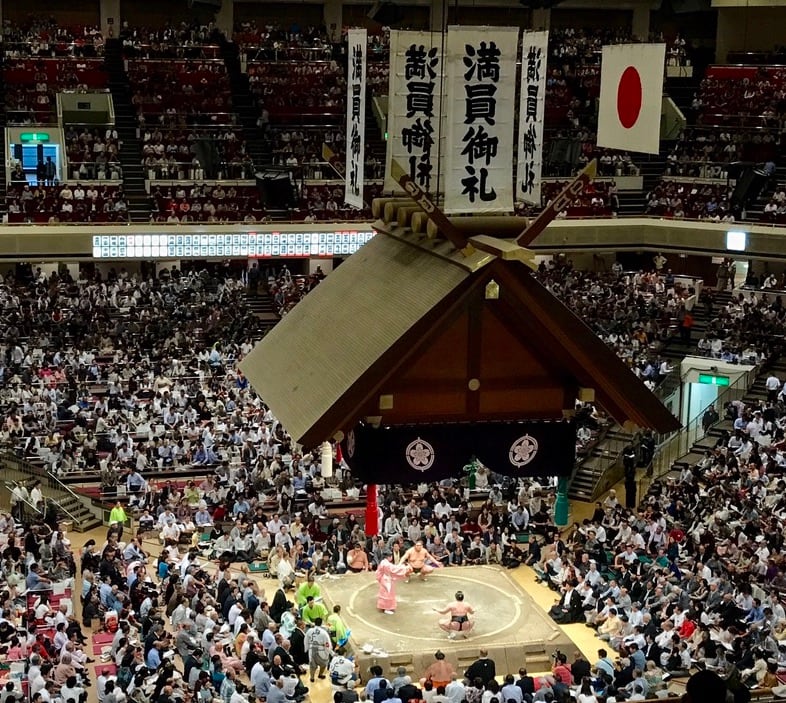
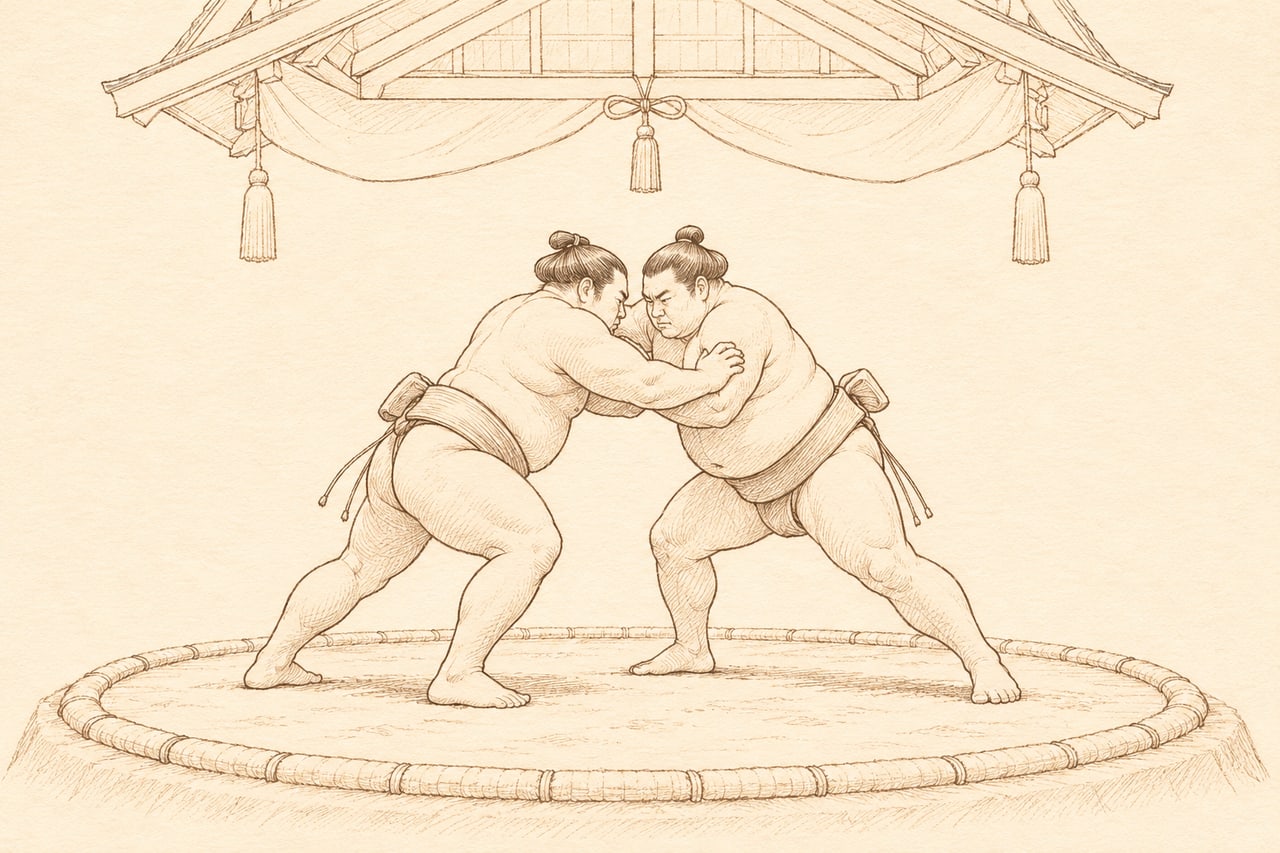
Find the straw boundary of the dohyo, the clay ring. A wrestler, or rikishi, loses if they touch the ground outside that circle or touch down with a part of the body other than the soles of their feet. Watch the feet near the edge. A wrestler may look trapped until a small step or turn sends their opponent off balance. Children can try to call the result quietly and then see which way the referee points. Japan Sumo Association's illustrated rules
Watch what happens before contact as well. You may see wrestlers throw salt to purify the ring. At a top-division ring entrance, look for the embroidered ceremonial aprons. In Tokyo, look up at the suspended roof above the ring, whose shape recalls a Shinto shrine. The shrine and temple guide explains some of the other ways purification appears in Japanese traditions. Japan Sumo Association's illustrated guide to sumo ceremonies
Choose a stable visit for a closer look at training
A heya, or stable, is where wrestlers train together. If your family wants to watch morning practice, choose a stable that specifically publishes public viewing arrangements or book with a provider whose access is confirmed by the stable. Ask about minimum age, floor seating, silence, photography and when visitors can leave before committing to an indoor session. The wrestlers may be traveling or resting, so check availability before making the morning your main plan. Japan National Tourism Organization's guide to stable visits
Arashio-beya in Tokyo publishes an English practice calendar and viewing instructions. The stable asks visitors to keep quiet, avoid flash and keep neighboring steps clear. Check its calendar again before setting out and have breakfast before you arrive. A brief permitted viewing can be easier for a young child than a group session with fixed departure times. Arashio-beya's practice calendar and visitor rules
Plan for dates without a Grand Sumo tournament
Look for a jungyo, the official provincial tour, if your dates are fixed. It may include practice, bouts and performances such as comic sumo or drumming. The association lists cities and dates, and the local organizer supplies ticket information and the day's program. For a commercial demonstration, read the listing for who performs and whether the program includes commentary or audience participation. Japan Sumo Association provincial tour calendar What happens at a provincial tour stop
In Tokyo, the Sumo Museum at Ryogoku Kokugikan makes a short visit. Its rotating displays draw from prints, ranking lists and ceremonial aprons. Check the museum calendar for closures and whether you need a tournament ticket to enter on your date. Give children an object to find, then consider a nearby lunch of chanko nabe, the hot pot associated with sumo wrestlers. The Tokyo day guide gives you ideas for the rest of an east Tokyo day. Sumo Museum visitor information Sumo Museum calendar
For more experiences that fit around the same stay, browse the Japanese culture guides or check the English-language museum and culture websites.