- Understand Shurijo Castle and the legacy of the Ryukyu Kingdom.
- Read bingata designs and discover sanshin, kumiodori and eisa.
- Choose a museum, workshop or performance for a family visit.
In Naha, the red gate at Shurijo, a stenciled bingata robe and a performance with a three-stringed sanshin give you three different ways into Ryukyuan culture. Start with one question for a family visit. Do you want to understand the kingdom and its buildings, look at the work that goes into a textile, or hear a story told through dance and music?
The Ryukyu Kingdom and Okinawa today
Okinawa was the center of the Ryukyu Kingdom. Its court and trading networks connected the islands with other places in East and Southeast Asia. The kingdom’s sites show how architecture, ceremony and religious life developed in this setting. Okinawan cultural life today also includes the experiences of people after the kingdom, including war, migration and changes in everyday language and work. The collection at the Okinawa Prefectural Museum puts those histories alongside one another. UNESCO’s Ryukyu World Heritage entry Okinawa Prefectural Museum’s permanent displays
A first-time visitor can give each stop a different purpose. At Shurijo, ask how a court or delegation would have reached the main buildings. At the museum, pick an object and read where it was made and who used it. In a theater, follow what the music does before a character speaks or moves. These experiences tell related stories at different scales.
Shurijo Castle, the gate and the restored main hall
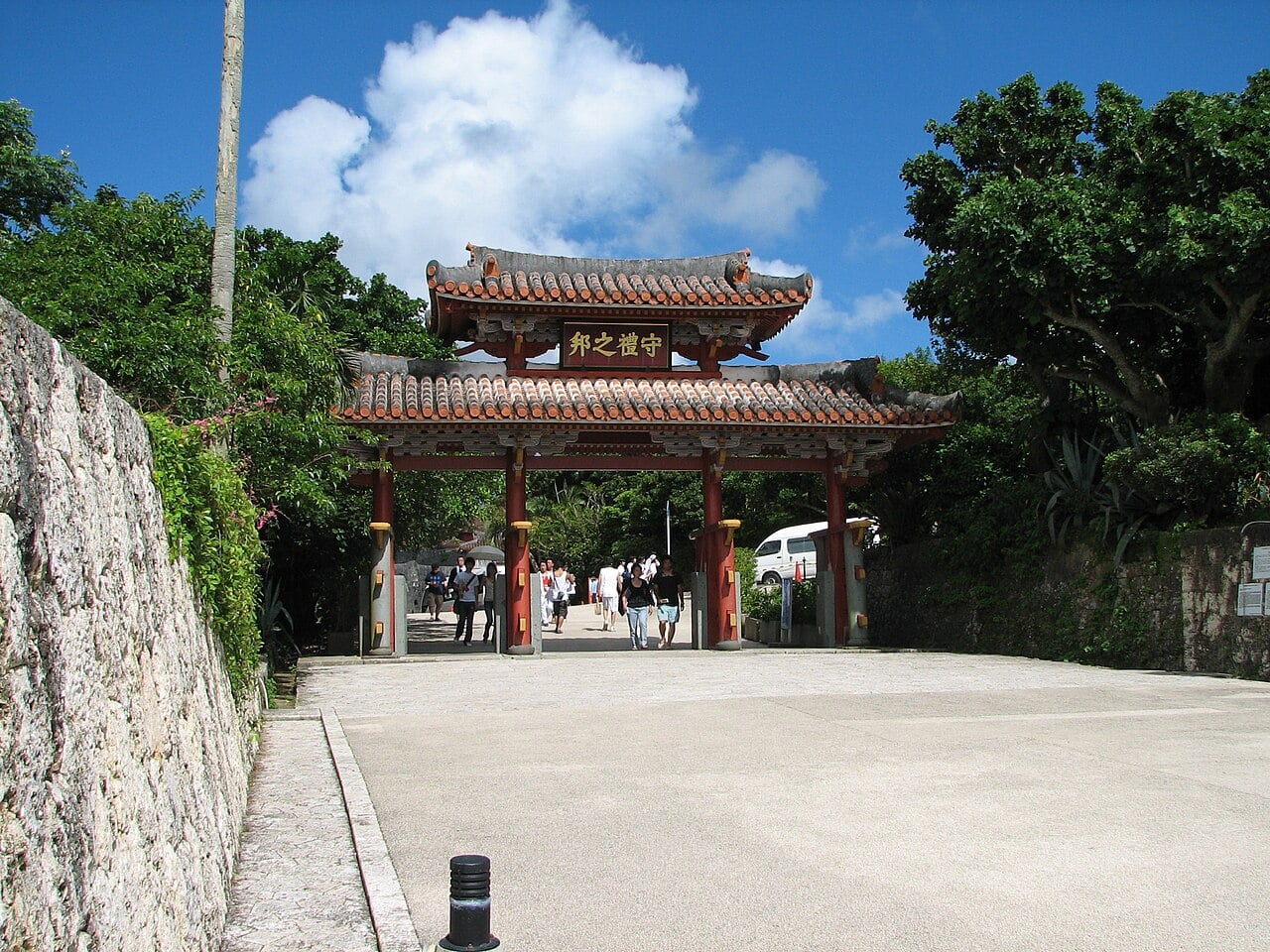
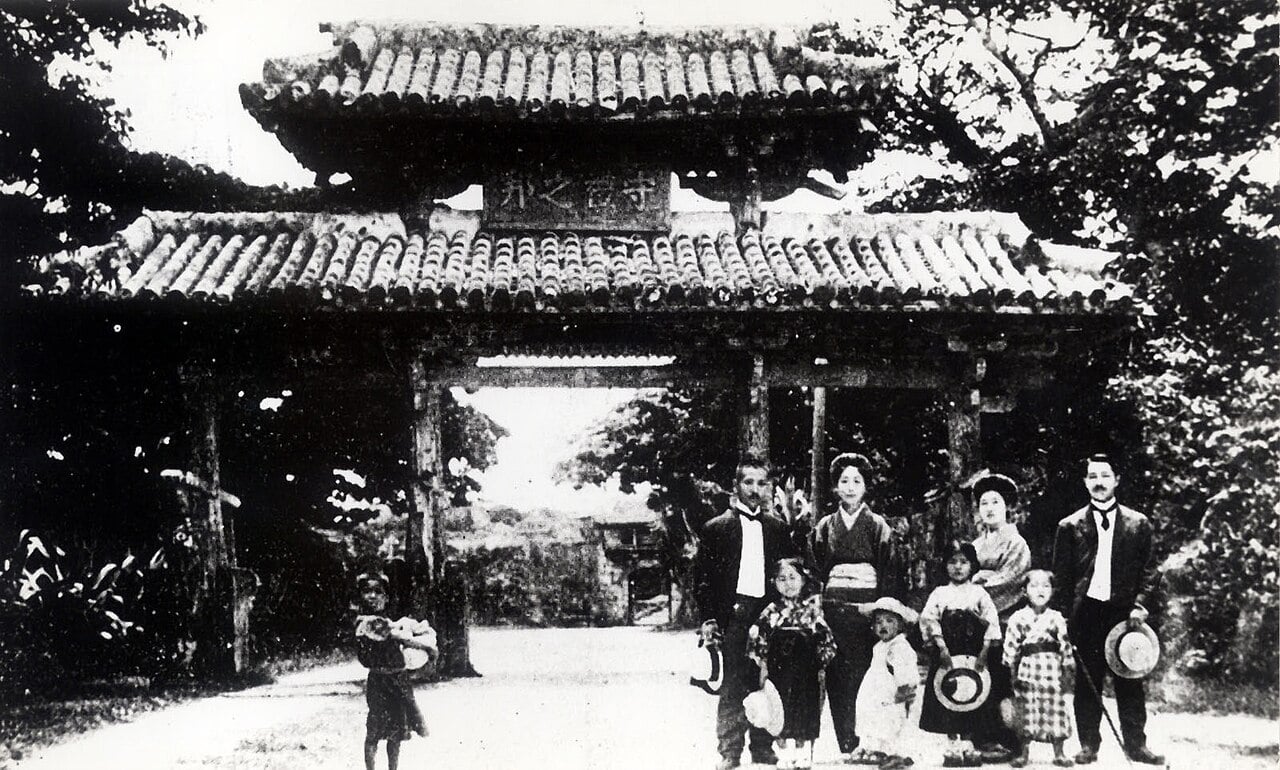
Start with Shureimon, one of the recognizable gates. Notice the roofline and the way the opening frames the next part of the approach. Walk up through the public areas at a pace that works for everyone. Shurijo is one of the sites associated with the kingdom’s UNESCO listing. The archaeological remains and the restored buildings each tell you something about the place.
The park announced that the restored Seiden, or main hall, would reopen for interior visits on November 23, 2026. The interior has designated entry times and an advance reservation system. Use the park’s ticket page if seeing inside is the reason you’re going. The page also explains what you can see in the paid area without an interior reservation. Once you know which part you’re visiting, check the approach from the entrance if someone in your group needs fewer slopes or steps. Shurijo Castle Park’s Seiden reservation information
Shikinaen. A garden built to receive guests
At Shikinaen, the royal garden and residence give a different view of court life. The garden is one of the sites in the broader Ryukyu World Heritage listing. Look at how the paths, pond, bridges and buildings appear together. A child can compare the view as the party moves around the water. A visitor interested in architecture can ask how the garden and its buildings received guests. Visit Okinawa Japan’s guide to Shikinaen
The garden can be a main outing on a day when the castle visit would feel too steep or crowded, but look at the actual paths before making an accessibility decision. Our Japanese gardens guide gives another way to read a pond garden through its changing views. The garden’s setting also gives your group something to compare with Shurijo without trying to fit both into one short morning.
Bingata. Read color and pattern on the cloth
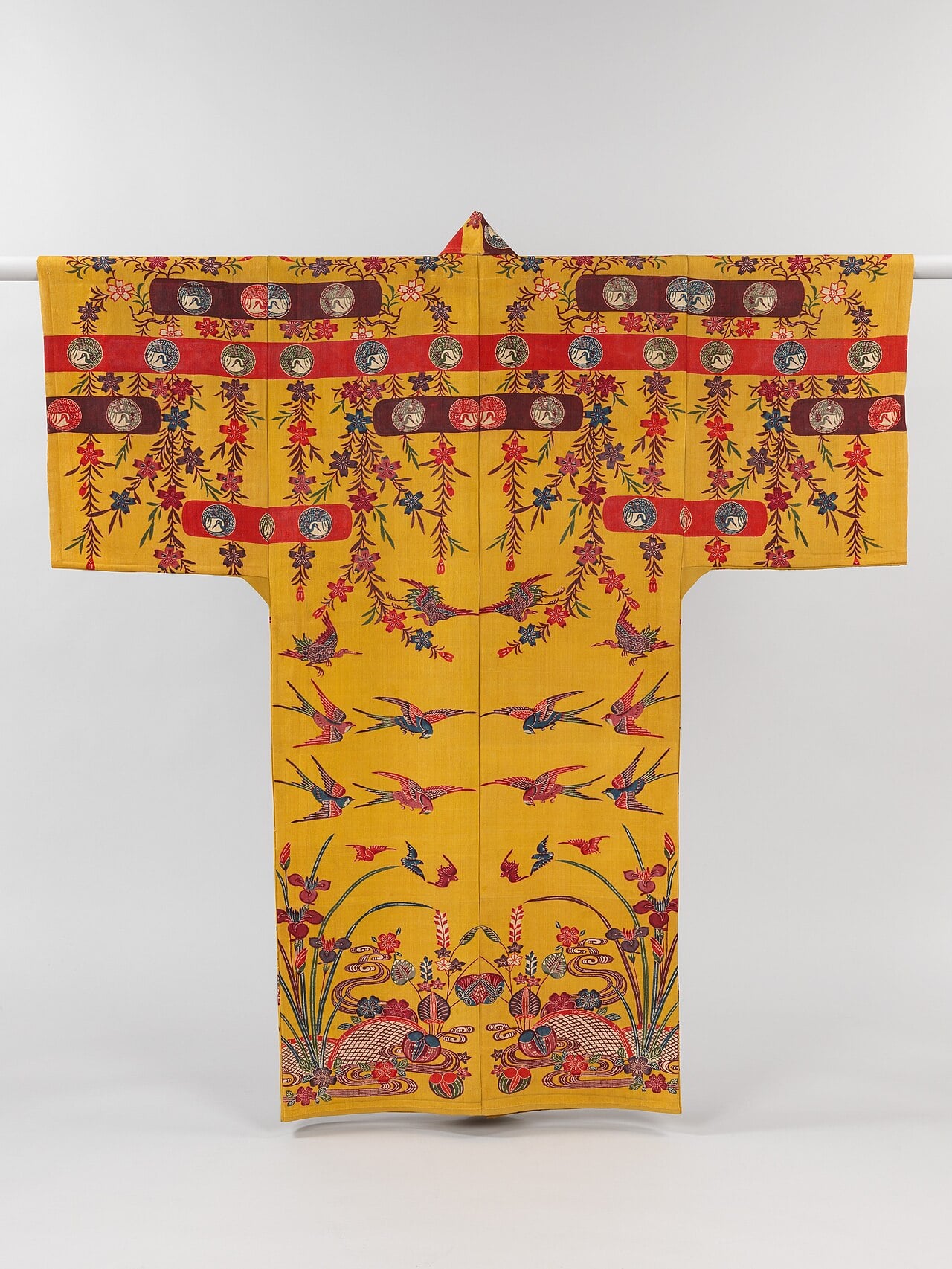
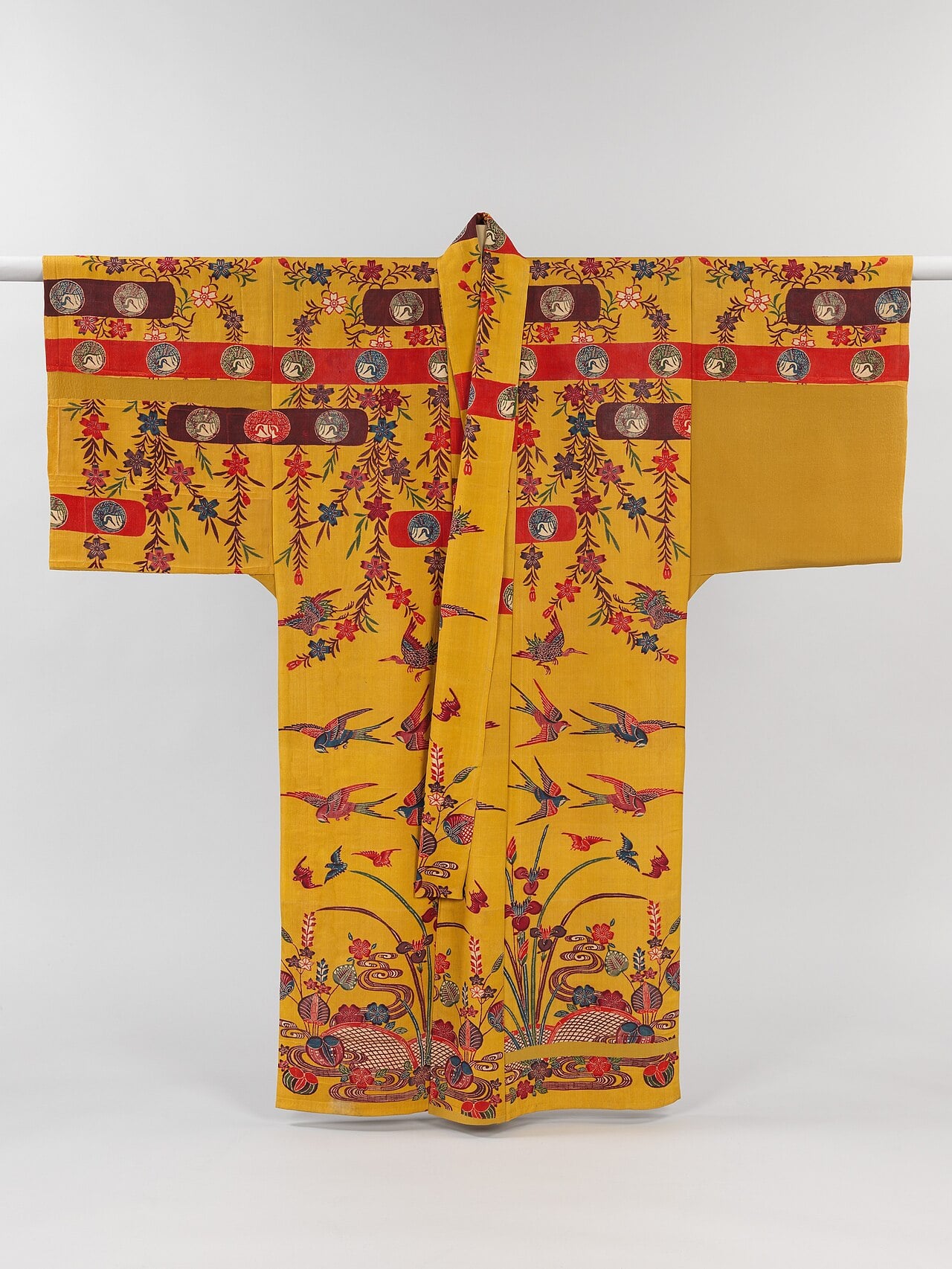
Bingata is a Ryukyuan dyeing tradition. A maker can use cut stencils and resist paste to set out shapes before applying color. Look at where a repeated motif begins and where the color changes within it. Court garments in museum collections are one place to see the results. A demonstration can help you understand the work between placing a stencil and seeing the finished pattern. Visit Okinawa Japan’s account of Ryukyu bingata
When booking a workshop, ask which steps a child will do, what the studio will demonstrate and when a finished piece can be taken away. Some classes offer a prepared pattern because cutting and preparing a stencil takes time and skill. For more on the cloth, sash and different functions of garments, see the kimono and yukata guide.
Sanshin, kumiodori and eisa
The sanshin is a three-stringed instrument heard in Okinawan music. In kumiodori, singers, instrumentalists, dialogue and dance carry the story together. This theater developed in a court setting. The National Theatre Okinawa explains the form and offers program listings. Ask about translated material, length and the age policy for the performance that interests you. A child can listen for when the music enters and see whether the action changes with it. National Theatre Okinawa’s kumiodori introduction UNESCO’s kumiodori heritage entry
Eisa is another tradition, often associated with community observances during the Obon season. Dance groups can use different combinations of drums and music. Some gatherings are local events, while others have a public festival program. Use the current listing to find where spectators are invited and at what time. A child who wants movement and drums may prefer a short public eisa performance to a full theatrical program. Okinawa’s official visitor guide to eisa Obon and Bon Odori in the Japanese festivals guide
One cultural outing at a time
If you have one museum day in Naha, give the permanent collection a clear question, such as how a court robe was made or what the buildings tell you about receiving visitors. If the children want to make something, put the workshop first and give it more time than the walk between venues. Choose a separate day for a performance if it ends late or if you want to compare the music with a daytime visit to a collection. A private family itinerary can work around a fixed Shurijo reservation or theater performance while keeping the rest of the day flexible.